International Ivory Society Circa 2012
For a number of years this was the official website for the International Ivory Society .
Content is from the site's 2009 -2012 archived pages.
If you have inadvertantly found yourself here while looking for the International Ivory Society, their current website is at: www.internationalivorysociety.org/
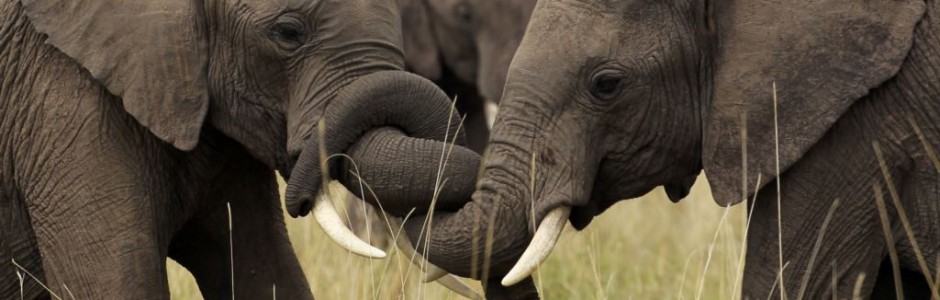
The International Ivory Society is for those who appreciate ivory from around the world and continue to be faced with the threat to the existence of ivory objects that are legally acquired.
The International Ivory Society (IIS) is a FREE club. Membership includes a subscription to the weekly newsletter as well as notices of meetings, lectures, and special offers. Our membership includes anyone with an interest in ivory. You can be a novice or an expert, a collector or dealer, scrimshander, carver, restorer, or appraiser. Basically anyone with an interest in ivory. You are provided with an opportunity to meet other collectors and people with special skills.
Among the superheroes supporting the efforts of the International Ivory Society is Batman. Through the efforts of MoonAtMidnight, online retailer offering Batman shirts and hoodies, a successful fundraising effort was able to help support the outreach of IIS. MAM offered both a portion of profits as well as donated their best selling Batman t shirts for a raffle, all from their very popular Batman t shirts online store. If you are interested in purchasing any of these items and wish to support the organization, indicate this on your order. Go to moonatmidnight.com and view the large selection of Batman apparel available online. Batman knows how important the preservation of elephants and other ivory bearing creatures are to our world. Don't let them down!
The Beauty and Appeal of Ivory Objects from Around the World
Posted by Charles Henry: on: December 4 2012 •
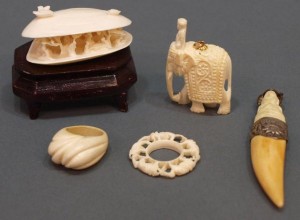
There are many collectors and common people who appreciate ivory objects from around the world. The term ‘Ivory’ has always signified images of some beautiful objects related to fine craftsmanship, luxury, style, exclusivity and value. Most people do not realize, but the human race’s connection with ivory objects is ancient.
During the Pleistocene era, the Cro-Magnons used ivory for carving. This was around 10,000 to 40,000 years ago. Around 2,000 B.C, ivory objects were also used by the Egyptians. Between the 12th – 14th centuries, ivory was used by the Europeans.
The Beauty of Ivory
Although ivory is often associated with standard elephant tusks, it is also derived from the teeth and tusks of many other animals, such as wild boar, hippopotamus, hornbill, warthog, sperm whale, walrus and narwhal.
In animals, ivory is the dentine equivalent of human teeth. Dentine is the calcified tissue just beneath the tooth enamel. In all the above mentioned animals, the dentine mass in large tusks and teeth is significantly more than what humans have.
Ivory is a carving material that is very hard. However, it is still lighter than stone or metal. Millions of people appreciate ivory objects from around the world. Throughout the history of human race, men have made sincere efforts to acquire ivory objects, either by decimating elephant populations or excavating mammoths.
In most cases, ivory is traded as religious or decorative objects, name seals and musical instruments. Tusk and tooth ivory offers excellent versatility for carving. Tusks can easily be retained in original shape. They can also be carved superficially. Ivory is often used in many different kinds of inlay work, carved boxes, figurines, and jewelry and serviette holders.
The list of ivory objects is endless. In 1920s, plastics arrived in the manufacturing industry. Moreover, there was increased awareness about cruelty toward animals associated with ivory harvesting. Currently, ivory objects are considered some of the best collectibles. It is worth mentioning that there are also some opportunists selling fakes.
How Can You Identify Authentic Ivory?
A cross section of elephant or mammoth ivory distinctly reveals cross hatched patterns. These patterns are called Schreger lines. However, even these patterns can be faked on plastic. The technique used to fake these patterns is called scrimshawing.
The best way to ensure the authenticity of the object is to heat a small pin, and poke the ivory object. In case you have genuine ivory, the pin leaves a tiny mark, and whiff of a burnt tooth. On the other hand, plastic gives off an acrid smell. You will also be able to notice a hole.
Different types of ivory objects have different characteristics. It is possible to identify a particular object’s authenticity, but if you are dealing with multiple ivory objects, you should get them certified from a laboratory.
These days, some collectors even purchase ivory objects online. Most sellers give certificates of authenticity to give you some peace of mind. Before you buy an object, you should conduct an extensive research, and purchase from only a reputed dealer. This will help you invest in something authentic.
Threats to Ivory
Posted by: Charles Henry on: September 4 2011
The unchecked and wanton slaughter of elephants has increased in recent years and has been the threat to the existence of ivory and wildlife as a resource income earner. Ivory can be very useful it is used for the manufacture of electrical appliances that can be used for airplane technology and radar equipment, it is valuable in the décor industry and it can be used in the making of musical instruments such as the piano. For all its uses, ivory is faced by a threat that can rid it of its existence, poaching.
Poaching has increased and in the last four years up to 40 000 African elephants have been downed for the illegal ivory market. Poaching has become a serious challenge to combat because of sophisticated weapons being used in their hunt down as well as the complicity of well-connected individuals in governments to those in the underworld of illegal trade. These individuals gain by sharing the loot that comes out of illegal ivory business. Efforts to apprehend such individuals have not succeeded because of the influence that they have in high levels of government. The poachers themselves are protected by the elite as they continue to plunder ivory.
Also one of the factors leading to the threat to the existence of ivory is the continuous encroachment of human settlements in land allocated for national parks and reserves. This has increased human-wildlife conflict and poachers use this to their advantage. As a result of high population increase, demand for land ownership and landlessness in most countries persists people have found their way into these parks and have disrupted the natural habitats and perennial migration routes of the elephants therefore when they attack homes and farms they are brought down by angry residents. Poachers see such conflicts as a means of getting ivory without facing direct implication and consequences.
Weak laws governing wildlife have also contributed to the thriving of illegal ivory trade and the threat to ivory altogether. Governments have not fully appreciated the damage that poaching can do to a country’s economy. The laws governing wildlife conservation and the penalties that follow breaking of such laws need to be firmed up, they do not give maximum jail sentences and punishment to offenders. The threats to wildlife are not also taken seriously, priorities by most governments usually favor infrastructural, economic and social development and wildlife conservation is not fully supported with wildlife and animal oriented initiatives getting low funding. This means that wildlife parks cannot get adequate staff to counter poachers who try to smuggle ivory.
The threat to the existence of ivory is primarily poaching. The factors mentioned above give credence to the fact that vigilance must be observed especially on governance. It is time that we sit down and have a deep reflection on the ramifications that slaughter of elephants has on ivory. There have been efforts to try and practice controlled and monitored ivory trade but such overtures have resulted in corruption that has made it almost impossible to control the trade. It is productive to have conversations and forums that surround the proper conservation of wildlife and how to eliminate poaching.

Important Things to Know About Ivory
Ivory - as distinguished from bone, antler or horn - includes the tusks and the unusually large or projecting teeth of animals such as elephant, walrus, hippo, pigs, and several species of whale. It consists of dentine, made up of components which are both organic (to provide the capacity for growth and repair) and inorganic (to provide rigidity and strength). Identification of the type of ivory is based on the composition of the dentine and its specific growth structure.
Ivory is very reactive to its environment. It bleaches when exposed to light but the most severe changes are linked to changes in relative humidity and temperature. Low relative humidity causes desiccation, shrinkage and cracking, while high relative humidity can cause warping and swelling. Heat fluctuations induce similar expansion and contraction. These problems are particularly acute with thin ivory objects, such as miniatures.
Some darkening or "patina" is the result of the natural aging process of ivory's organic constituents. Because it is porous, ivory is also susceptible to staining. It darkens in contact with the skin or oils and can be stained by corroding metals or other colored materials.
Many liquids, including water and cleaning solutions, are destructive to ivory and should be avoided.
Handling
Handle ivory with white cotton gloves. If these are not available, wash your hands first with soap and water to remove hand oils and dirt.
Storage Conditions
The best protection for an ivory object is a carefully controlled environment, both in terms of relative humidity (RH) and temperature. Ideal conditions are 45-55 % RH and approximately 70° F (21.11°C), with low light levels, at approximately 5 footcandles. Conditions should be kept constant; at the least, extreme conditions or rapid fluctuations should be avoided.
Keeping the object in a tightly closed display case or storage drawer provides a considerable degree of buffering against sudden changes in temperature and relative humidity and is protection against dust and dirt. Dark storage also eliminates damage due to light. However, as a note of caution, avoid sunlit or spotlit display areas, closed cases where heat can build up from interior light bulbs, proximity to ventilation or heating ducts, the tops of appliances, exterior walls or cold windows. Storage drawers and shelves should be lined with a chemically stable cushioning material such as polyethylene or polypropylene sheeting. Avoid using rubber-based materials for storage or packing as these can produce unnatural yellowing of ivory. Keep ivory away from cotton as it will draw out the stored moisture. Ivory does require access to a certain level of moisture and glasses with water should be included in the display cabinate. The ivories will then be able to access the moisture they require from the surrounding air.
For additional protection, the artifact may be wrapped in un-buffered, acid-free tissue paper, and stored in a sealed polyethylene (ziplock-type) bag. Well washed unbleached muslin or diaper fabric may be substituted for the tissue.
Cleaning and Repairing Ivory
Broken, friable or extremely dirty objects requiring repair, consolidation or extensive cleaning should be referred to a professional conservator.
Common Ivory Terms
AGE LINE
Lines occurring on old ivory, that appear blue or black, resulting from dirt filling in to cracks over a period of time.
ALABRITE
A combination of alabaster powder and a matrix. It is a pale yellow color when new, but will darken with age. Look for mold lines, air bubbles, and a texture that fells "rougher" than true ivory.
ANTLER
Antler is a natural ivory substitute. Deer Elk, Moose and Caribou (Raindeer) antler are commonly used. Antlers are pure bone, the fastest bone growth known. Antler will generally appear more coarse and porous than bone and will lack any traces of striations and should display little or no sense of longitudinal graininess. In cross sections irregular holes appear rather than the regular narrow channels seen in bone. Except in the most heavily worked objects, traces of the spongy interior of antler are usual preserved. There is no marrow cavity as in bone.
ARTICULATED
A carving joined in such a manner that the parts can move as for example the legs on a lobster or insect.
ARTIFACT
Often everyday utilitarian ivory objects are lost or discarded, and not recovered for decades or even centuries. These include harpoon points, knives, net weights, and sled runners. They are collectively referred to as artifacts.
BABIRUSA
A member of the swine family (along with boar and warthog).Found only on the islands of Sulawesi, Togian, Sulu, and Buru in Indonesia. The only animal whose upper canines grow upwards through a hole in the upper lip and curl over the face.
BACHIRU
A Japanese term referring to an ivory carving which is made through outer bark to create a cameo effect.
BARK
The outer (usually cementum layer) of a tusk.
BAROQUE IVORIES
Carvings made in the 16th century in Europe during which ivory carvers ceased to imitate earlier works and began carving medallions and to do portraiture.
BEACHED IVORY
Ivory washed ashore from the ocean or river.
BILLIKEN
Along with the horseshoe, the rabbit's foot, and the four-leaf clover, the billiken is one of America's favorite good-luck pieces. It is carved in the form of a bald headed smiling creature, and is the invention of Florence Pretz, a Kansas City, Mo. schoolteacher who patented it in 1908. There are numerous alternative spellings.
BLACK IVORY
A term for Rhino horn, which in fact, is not ivory at all.
BLACK LIGHT
A long-wave UV light used to test for ivory. New ivory will reflect the full spectrum and appear bright white or blue. Plastic absorbs some of the light and looks a dull blue or off color.
BODKIN
A sailor's tool used to punch holes into cloth.
BONE
The most common material used as an ivory substitute and that composes the skeletal structure of most vertebrates. Bone carvings exhibit black "dots and dashes" on their surface that distinguishes them from ivory.
BUSK
A slender piece of ivory inserted into a pocket on the front of a corset.
BYZANTINE IVORIES
Work produced in Constantinople, under Justinian in the 6th century until the collapse of the Empire in the mid fifteenth century. Byzantine expressions often seem angular, stiff, sometimes grotesque, with floral ornamentation, engrossing and incorporating symbolism and mystical representations. The principle form of carving was as a ceremonial DIPTYCHS, which were a medium of artistic interchange between west and east. Other items made in quantity, included CASKETS and PYXIDES, little round boxes that took advantage of the natural shape of the hollow end of the elephant tusk.
CANDLE SCREEN
A carved piece of ivory utilizing the outside of a piece of tusk that uses a candle mounted in the rear to illuminate the carving. These are of European origin.
CANINE TOOTH
A pointed tooth adapted for holding.
CARPENTER FISH
A reference to the Sperm whale made by early mariners who thought the clicking sounds these whales made sounded like hammer blows.
CASKET
A wooden box (case or coffer) usually rectangular and of small or medium size, decorated or completely covered on the top and sides with ivory panels. Some were made entirely of ivory.
CASQUE
An enlargement on the upper surface of the bill of a Helmeted Hornbill.
CELLULOID
One of the first manufactured ivory substitutes. It is often made with the long grain
lines typical of elephant ivory, but it does not have the cross-hatching that is also diagnostic of
elephant ivory, nor does it display any nerve line. It was commonly manufactured up into the 1930's.
CEMENTUM
A substance which forms over the dentine that enables the tooth to adhere to the jawbone and gums.
CHRYSELEPHANTINO
An innovation during the Art Deco period that combined mass-produced ivory with cast bronze elements.
CITES
An abbreviation for the Convention on the International Trade in Endangered Species of Flora and Fauna. This is a trade agreement that over 100 countries have agreed to abide by. It deals with the trade between countries in an effort to regulate the import/export of imperiled wildlife and plants to prevent their extinction. In the USA, the Fish and
Wildlife Service act as the management authority.
CRAZING
The blue age lines that often appear on an old billiard ball.
CROSS-SECTION
Cut at a right angle to the long axis.
CROSSHATCHING
A pattern of crossing lines found in ivory of members of the proboscidean (elephant) family. Evidence of crosshatching is one of the diagnostic tests for identifying elephant ivory. It is also referred to as Schreger lines, engine turning, or herringbone.
CROZIER
The most notable of the ecclesiastical objects in ivory are the pastoral staves known as Tau (shaped like the letter T) and Crozier (round shape). The Tau is the earlier of the two and probably in its origin was nothing more than a richly adorned walking staff for the domestic use of the prelate. The earliest known example dates to the 6th century and is
now preserved in the Cathedral of Bruges. Also spelled Crosier.
DEAD IVORY
Ivory claimed from an animal that has been dead for some time, such as an elephant carcass in the jungle, etc.
DEVIL'S WORK BALL
See MYSTERY BALL
DIPTYCH
An article for display composed of two pieces hinged together..
DOCTOR'S MODELS
A familiar oriental carving of a reclining nude usually on a stand, sometimes shaped like a couch. They are also referred to as "medicine ladies." An account given in 1936 stated " To overcome the difficulties that such reticence naturally placed in the way of physicians called to diagnose and treat sick ladies, the former had ivory carvers make them small nude figures in repose showing in detail every organ. One of these figures would be taken to the bedside of the patient, who would put her hand through the folds of the curtains that hid her from the physician's view and touch the exact spot that was causing her trouble." This explanation is no longer accepted as its use is not supported by any
documentation in medical papers.
DOLPHIN TOOTH
A term for Hippopotamus ivory.
DUGONG
An aquatic mammal of the Sirenia family that resembles a manatee. Lives in the Pacific Ocean and is the closest living relative of the elephant. These are certainly one of the rarest of all ivories. Although they do not appear outwardly to bear tusks, the female does have inside her skull huge tusks often twice as large as the males; much larger in diameter, and almost entirely solid. These tusks are used for carving in Java, Sumatra, and in the Philippines. The tusks are a pale apricot in color and average 6-8" in length.
EDO
A period in Japanese history from 1615-1868 AD.
ELEPHANT
There are two varieties alive today--the Olifont (Asian) and Loxodont (African). Rather than classifying elephants by describing the tusks and trunk, the actual zoological definition is concerned with bone structure. Thus the closest living relatives of the modern elephant are the Dugong & Manatee of the Sirenia family, and Hyraxes (rodent-like creatures in Africa.). The elephant's tusks are modified incisors. The African species has tusks for both male and
female, whereas in the Asian species only the male (and then not always) have tusks.
ELEPHANT PEARL
A rare, round layered ball that can form in an elephant's tusk. Concentric layers of DENTINE are deposited on a foreign body, creating a bed of spherical, pearl like objects.
ENAMEL
The hardest part of a tooth, usually found on the crown or tip.
ENGINE TURNING
See CROSSHATCHING, SCHREGER LINES.
EXTANT
In existence, not destroyed or lost.
EXTINCT
No longer in existence, died out.
EWER
A wine decanter with a long spout.
FALSE IVORY
There are a number of terms that indicate that an item is not real ivory. These include faux, pryalin, mandarin, and french ivory.
FICTILE IVORY
Plaster of Paris copies made by taking a cast of a real ivory carving.
FID
A large pin used for separating the twisted strands at the end of a rope.
FINIAL
A crowning ornament on top of another object such as covered box or stein.
FOSSIL IVORY
Ivory usually from mammoth and walrus that has been buried for centuries in ice, water, or dirt. It is a major source of ivory for carving, scrimshaw, and restoration.
GALOLITH
A curd product used as an ivory substitute. It can be cast in a mold. Sometimes, fake grain patterns are pressed onto the surface. It has been around since the 1920's. Look for traces of mold marks and air bubbles.
GANESH
A Hindu god, often the subject of ivory carvings. Ganesh is the elephant headed son of Shiva and Parvati and is known as the 'remover of obstacles' as well as the protector of wisdom, erudition, and well-being.
GILDED
A term meaning covered in gold.
GLOBE
An old billiard ball scrimshawed into a representation of the earth.
GOLDEN JADE
See HORNBILL IVORY.
GOTHIC IVORIES
During the 12th century, Europe underwent an intellectual change in which there was a renewed interest in man and the world of man. Reality became an object of investigation. This period ended in the 15th century.
GREEN IVORY
Ivory from a freshly killed animal.
GROUPING
A carving with 2 or more people or animals.
HALVERSIAN SYSTEM
A series of interconnecting fluid transport spaces that show up as black "dots and dashes" in carved bone.
HAND RESTS
These Chinese objects were called "Chen Shou" or pillow for the hand, and were used by calligraphers for steadying their hands while at work.
HANKO
A Japanese term for a seal used to validate a legal document.
HARD IVORY
Elephant ivory from western Africa.
HERRING BONE
See CROSS HATCHING.
HIGH RELIEF
A term meaning deeply carved
HIMATOSHI
Japanese term for the two cord holes in a NETSUKE.
HIPPOPOTAMUS
The hippopotamus is the last and largest member of the articodectyla order. It can achieve lengths of over 13' and weigh in excess of 8,000 lbs. The hippo has 34 teeth of which 12 can be used forivory. The two lower canines are the most prized, and can weigh 6 lbs. and measure over 2 feet long. The teeth have extremely hard enamel and can strike sparks when in contact with a steel instrument. Hippo teeth are very brittle and tend to develop minute cracks, and therefore, are seldom cut into thin slabs. They do, however, take the best polish of any ivory.. See SEASHORES TUSKS and DOLPHIN TEETH.
HORNBILL IVORY
A natural ivory substitute made from the bony casque of the Helmeted Hornbill (Rhinoplax Vigil), a bird found only in Indonesia. It is also referred to as HO-TING and GOLDEN JADE.
HO TING
See HORNBILL IVORY.
HU
This is a tablet, often made of ivory, regarded as a badge of rank and carried by a man of rank. At Court, they were held out in front of the mouth providing protection from a person's breath offending the Emperor.
INCISOR
Any tooth adapted for cutting- found in front of the canines.
INRO
Japanese term referring to a medicine box.
IVORITE
An ivory substitute made from ivory dust mixed with a resin, then cast in a mold. Look for mold marks, air bubbles, and an absence of cross-hatching.
IVORY
The dentine portion of a mammalian tooth.
IVORY BLACK
Burnt remains of elephant ivory used as pigment for India Ink and some paints.
IVORY COLOR
The natural color of growing ivory is mainly determined by the species and its diet. Indian elephant ivory is whiter than African, which is creamy white for animals feeding on the savanna and more brown for those in the Congo forests. Rose tinted tusks come from the bamboo forests of Ceylon. Tusks can on occasion even be black.
IVORY JADE
The Chinese developed a process for making artificial jade from the secondary dentine of a walrus tusk. When dyed green with verdigris, it resembles one of the crystalline forms of jade.
IVORY JELLY
A food compound made in China from ivory dust.
JAGGING WHEEL
Also known as a pie crimper, was used to seal the dough on a pie. During the 18th and 19th centuries pies were a main part of a meal and not just for desert.
KUNG PU
The Chinese Imperial Board of Works during the reign of the Emperor Ch'ien Lung.
JAPANESE IVORIES
Unlike either Europe, China, or India, Japan did not have an ancient tradition of ivory carving. The elephant was not native to Japan nor did Japan trade much with other countries early in its past. A small number of specimens, which date from the 8th century, have been preserved. The 18th and 19th century saw the craft take hold, with many notable areas of expertise developed.
KIRIN
The Kirin is a mythical creature from China where it was called ch'i-lin. It has the body of a stag, the tail of a cow, and the hooves of a horse. While walking, it never even bends a blade of grass, because it is bound to avoid injury to any living thing. It is a common subject of many NETSUKE and OKIMONO. The other three creatures were the Phoenix, the Dragon, and the Tortoise.
KYAN ZIT
Elephant tusk that displays unusual regularly spaced rings, resembling bamboo.
LINES OF OWEN
The round, tree like pattern of lines seen in elephant ivory.
LO-HAN
An Indian Buddhist group of followers who were revered. They were also called ARHAT and in Japan are known as RAKAN. Usually displayed in groups of 18 or 500.
LOW RELIEF
A term meaning a shallow carving.
MANDIBLE
The term for the lower jawbone. All Sperm Whale teeth come from the mandible.
MAMMOTH
A member of the proboscidean family that emerged about 5 million years ago in Africa. Although related to elephants they are not their ancestors, but rather a separate branch of the same family tree. The two species were extant at the same time and in the same area (Africa). As they migrated North they evolved through several stages until they eventually emerged as the Woolly Mammoth in the Arctic and the Colombian Mammoth in North America. Mammoth ivory may be legally sold inside or outside the United States.
MARINE IVORY
This is a term used in reference to ivory from aquatic mammals such as whale, hippo, and walrus.
MARQUETRY
Inlaid work as for example a piece of furniture inlaid with ivory.
MEDIEVAL IVORIES
Ivories made during the period from the founding of Constantinople in 330 AD and ending in the 16th century. Most were made for the Christian churches.
MEIJI
A period in Japanese history from 1868-1912 AD.
MICARTA
An ivory substitute composed of layers of cloth and Bakelite joined under pressure. It is mostly used for knife handles and as a material for scrimshaw.
MILK TOOTH - A juvenile tooth that is lost and
replaced with a permanent tooth after infancy.
MING DYNASTY
The period of time in China from 1368 to 1644 AD.
MONOBLOCK
Carved from one piece of ivory.
MONOCHROME
A finish using only one color. See POLYCHROME.
MORSE IVORY
A term that refers to walrus tusk.
MYSTERY BALL
First written about in 1388, these expressions of ingenuity and craftsmanship consist of carving sphere within sphere from a solid piece of ivory. Other names include DEVIL'S WORK BALLS and PUZZLE BALLS.
NARWHAL
The narwhal, is a small (12-16 feet long) type of whale. The male of the species retains its upper canine tooth, which grows long and straight, averaging 6-8 feet in length and 9-12 pounds in weight. This ivory tusk is hollow for more than half its length and does not yellow with age. Because of the single tusk, the narwhal is also called the "SEA UNICORN", and in medieval times articles crafted from this tusk ivory was believed to be useful in detecting poison in food or drink. Some potentates commissioned narwhal drinking cups.
NETSUKE
Japanese term for a toggle used to keep the INRO from slipping through the belt.
ODONTOLITE
From the Greek, "tooth stone". Colored ivory from Mammoth tusk that has been buried next to certain minerals whose colors leach into the ivory. Color ranges from blue to greenish. This material is sometimes passed off as turquoise. Odontolite comes primarily from Alaska, France, and Siberia.
OJIME
Japanese term for the slide fastener, or bead, used to put tension on the INRO.
OKIMONO
A Japanese carving, larger than a netsuke, and made for display.
OLIPHANT
A carving made in the shape of a horn from the pointed end of an elephant tusk. They were used as containers for gunpowder, to sound at the beginning of a battle or religious service, as a drinking vessel, or to represent the granting of land tenure or appointment to office. The word is an early English term for elephant.
ONI
An imp or demon with horns and hairy body, also shown with 3 fingers.
OSTEODENTINE
The inner core of a WALRUS TUSK, also called SECONDARY DENTINE. Osteodentine is unique to
walrus ivory.
PA HSIEN
The Chinese term for the Eight Immortals.
PALEOMASTODONS
Members of the elephant family all now extinct. They came in a variety of strange sizes and shapes.
PATINA
In discussing ivory, patina refers to a range of color that a piece acquires over time as the ivory itself oxidizes.
PLACQUE
An ivory carving mounted horizontally on a stand.
PLINTH
The base or block upon which some ivory carvings are mounted.
POLYCHROME
A finish employing multiple colors. See MONOCHROME.
POLYPTYCH
An article for display composed of more than three pieces hinged together. See DIPTYCH, TRIPTYCH.
PORTRAIT
A term for a small ivory figurine.
PRIMARY DENTINE
The main component of teeth which is normally carved and referred to as 'ivory'.
PULP CAVITY
The innermost area of a tooth, which in life contains a soft tissue called the pulp.
PUZZLE BALLS
SEE Mystery Ball
PYXIDES
A small round box of ivory, utilizing the hollow end of the elephant tusk.
QING DYNASTY
The period of time in China from 1644 to 1911 AD.
QUAN YIN
The Goddess of Love and Mercy. Her name is also seen spelled as Guan Yin and Kwan Yin.
RAW IVORY
Ivory that is in its natural condition, i.e., not cleaned, polished, process, or enhanced in any way.
RELIQUARIES
Finely made cases used to store the personal effects of deceased Christian figures who had achieved great merit and esteem.
RENAISSANCE IVORIES
Ivories made from the 14th to 16th centuries or between the Middle Ages and Baroque periods. During this period, little of significance was produced.
ROMANESQUE IVORIES
Ivories made in Europe during the 11th century that reflected a resurgence of figural art and expressed a desire for elegance.
ROSE IVORY
Tusks with a high oil content, best suited for the carving roses in Europe during the 19th century.
RYTHONS
Heavy drinking horns made of pieces of elephant's tusk, probably used for liturgical purposes. Historically crafted by the Parthians, an Iranian nomad group from the Caspian Sea area.
SEA HORSE TUSK
A term for Hippopotamus ivory.
SEA UNICORN
See NARWAL.
SECONDARY DENTINE
See OSTEODENTINE.
SCHREGER LINES
A term sometimes used instead of 'crosshatching' when describing elephant ivory. Named after the German anatomist Bernhard Gottlob Schreger who first described the lines in proboscidean dentine in 1800.
SCRIMSHAW / SCRIMSHANDER
An artistic pastime particularly associated with the USA is the practice of sailors, engraving and carving designs on
whalebones, whales teeth, shells, and walrus tusks. Although this art form was practiced in the late 18th century, the collector has little chance of finding a dated piece earlier than 1830, and few genuine examples exist before 1850.
SCRIVELLOS
Used in referring to a small elephant tusk.
SENSOR
Short term for an incense burner.
SHEET IVORY
In 1826, M. Pape received a patent for a machine that produced a 30" by 150" thin veneer of ivory. Another such piece was displayed at the Great Exhibition in London in 1851. No information remains as to the machine or examples of its production.
SHIBIYAMA
Japanese family name now used to describe ivory inlaid with mother of pearl, hardstone, and coral.
SHOKI
The name of the Japanese "demon queller."
SOFT IVORY
Elephant ivory from eastern Africa.
SPERM WHALE
This whale was originally hunted for its oil. The sailors made use of the 50 or so teeth from its lower jaw for carving and scrimshaw. It is currently an endangered species.
STABLIZED IVORY
A chemical process that hardens old ivory so that it wont crack, warp, or chip, and works without changing its color.
STIPPLE
The process of making a series of dots that when view from a distance compose a scrimshaw image.
SWIFT
This is a complex yarn-reel made of over 100 pieces of ivory.
TABLE SCREEN
An ivory carving mounted vertically on a stand.
TABUA
A word used in Fiji for a Sperm Whale tooth. It is a symbolic welcome for respected visitors and is still commonly used to arrange marriages, to show sympathy at funerals, to request a favor, and to settle disputes.
TAGUA
Also known as VEGETABLE IVORY, the Tagua nut is the seed of a particular variety of palm tree found principally in northern South America. Tagua is used as an ivory substitute since it is extremely hard, takes a high polish, and absorbs dyes readily. It is used to make buttons, jewelry, chess pieces, reeds for wind instruments, piano keys, umbrella handles, and small figurines including netsuke.
TAU
See Crozier.
TEA STAINED
A process of artificially patinating ivory to enhance the appearance of age.
TIZ
Abbreviation for TUSK INTERSTITIAL ZONE, which is a line found in the center of hippo teeth, that represents the convergence of the developing dentine.
TOKANOMA
In Japan, the elevated alcove used for displaying an Okimono.
TOOTH
Structure in the mouth consisting of a root, neck, and crown that have been adapted for tearing and chewing.
TRANSITION RING
A line found in a tooth that separates the cementum from the dentine.
TRIPTYCH
An article for display composed of three pieces hinged together. See DIPTYCH, POLYPTYCH
TUPILAK
An abstract Eskimo carving made in Greenland and steeped in mystery and tradition. The most prized are carved from whale teeth and walrus tusk.
TURNED
A carving made on a lathe.
TUSK
A tooth that is outside of the mouth.
UTILITARIAN IVORY
A term for everyday useful objects made from ivory such as cutlery, game pieces, jewelry, drinking vessels, etc.
VEGETABLE IVORY
Besides TAGUA palm seed, a number of other palm species bear seeds that are suitable for carving. Ivory Nut Palm, American Oil Palm, Pelana Palm, Forest Coconut Palm, Foxtail Palm, Doum Palm, At Palm, Jessenia Palm, Alexander Palm, Australian Black Palm, Stilt Root Palm, Beccario Palm, Manila Palm, Nubian Palm, Betel (Areca) Palm, Raphia Palm, Bismark Palm, and Miriti Palm.
VENEER
A thin layer of ivory covering a base of other material, usually wood.
WALRUS
Next to elephant ivory, the walrus tusk is the most popular type of ivory. Tusks have been known to reach lengths of 5 feet and weigh over 15 pounds. Walrus ivory was once credited with possessing magical and medicinal properties, with the power in particular to staunch the flow of blood, to heal wounds and to detect poisoned food. In cross section, a walrus tusk has a thick coating of cementum which shows growth rings much the same as a tree. Inside this is an inner layer of dentine, the lines of which radiate outward from a central core. The central core itself appears
to be finely compacted, mottled ivory. A walrus tusk has no nerve cavity.
WHALES, PORPOISES, DOLPHINS
There are 79 species of cetaceans recognized with the main difference being their size. The whales are classified into 2 groups--Toothed and Toothless (having baleen plates). Examples of Toothed whales include the Sperm, Killer, Narwhal, and Belugas. Examples of baleen whales include the Right, Bowhead, Blue and Minke.
WHALE IVORY
An old term that refers to Baleen, a bony substance from the mouth of some whales.